

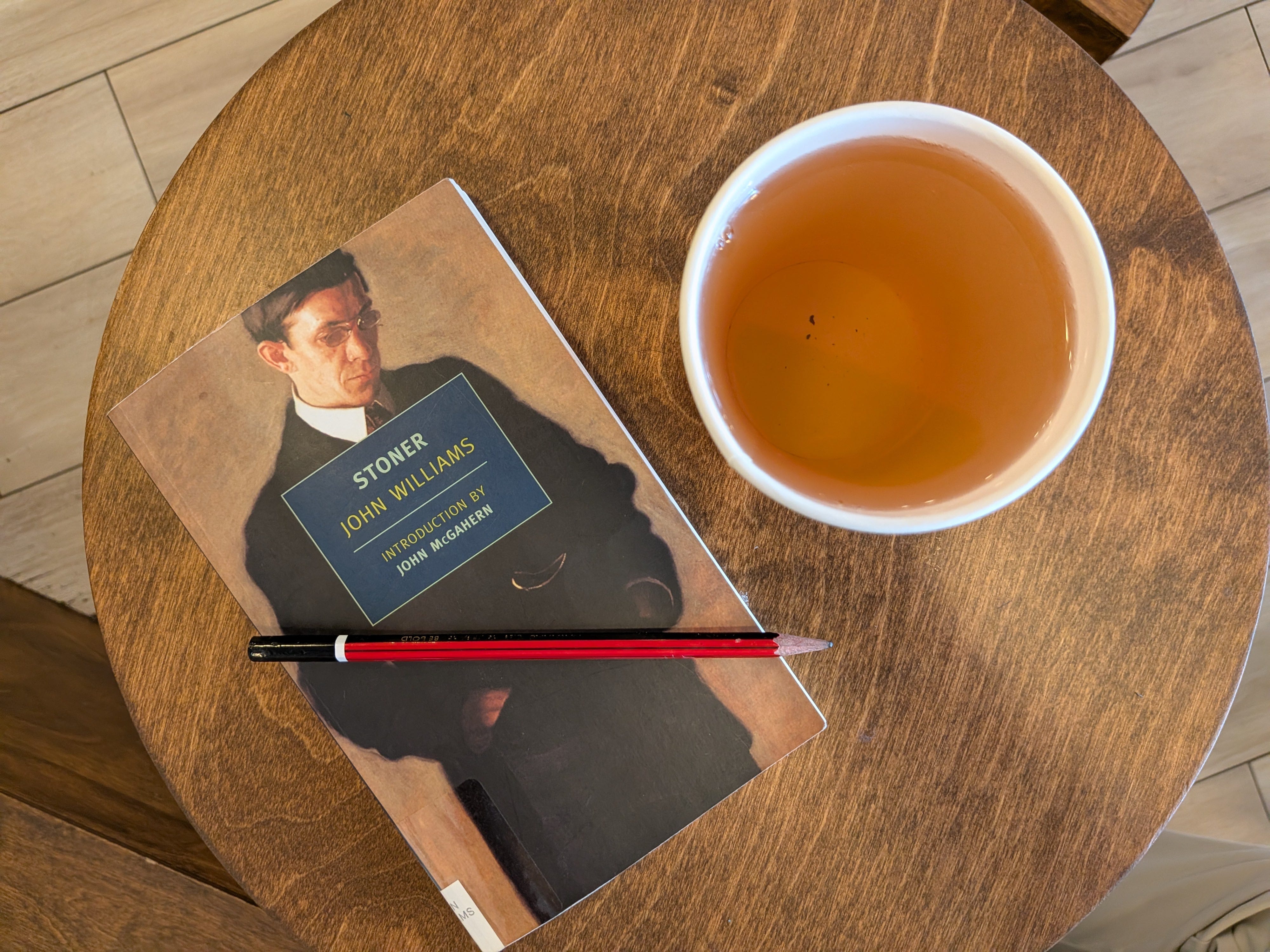
Sometimes it’s hard to describe the storyline of a book, especially when it’s literature. It’s far less about the plot and much more about expression. Stoner by John Williams is one of those books.
The book is about a boy, William Stoner from a Midwest farming community, born into hardship, who goes to university in Missouri to study agriculture. The first in his family to attend college, he ends up choosing an alternate path, becoming an English professor at that same university. He marries a woman he thinks is his soulmate, only to end up in an emotionless union that is wrong for both of them. He later finds true love in an extramarital affair with a student, but chooses to give it up to avoid disrupting the world around him—convinced it is the most logical thing to do, even as it breaks him. Though he finds joy in his beautiful daughter, his wife unintentionally pulls her away from him, driven by her own compromises, ruining the relationship for both father and daughter. After an early retirement from teaching, he faces cancer in the final chapter of his life.
With limited exposure to the world, William Stoner was instinctively inclined to let life guide him rather than proactively taking control. This theme runs throughout the novel: he surrenders to every situation he faces, yet remains fully committed to every role and responsibility he holds. It is an ordinary life shaped by hardship, devoid of loud accomplishments, but one you connect with on a deeply personal level.
Despite his quiet nature, the writing captures a unique dignity in Stoner. He becomes a hero in his own right through the grace with which he accepts his fate and the dedication he brings to his routine existence. There is a profound sadness to the story that lingers on human loneliness, painting a tragic yet beautiful picture of complete surrender.You tear up reading about a life that held promises but one shaped by a social construct anchored in shame and guilt, leaving you grieving for a man who deserved so much more.
One can’t help but marvel at the originality and depth of writers from past eras. English novels likely started being written in the early 1600s. And in a span of 400 years, the writing ecosystem has evolved a lot. It’s hard to say if writing was better in the past versus now but the literature has changed a lot. Art imitates and finds inspiration from the real world and vice versa. As the world has become more prosperous and well equipped to handle the basic life needs around food, shelter and clothing, art has shifted from depicting hardship and realism towards more analytical things. The majority of the people have also lost the patience to romanticize things which would come around anchoring on a few things and dwelling deeper in them. From a past where people would invest their lifetime to compose a few pieces now it’s about creating fast consumable content. We have moved from a world of far and few to often and more.