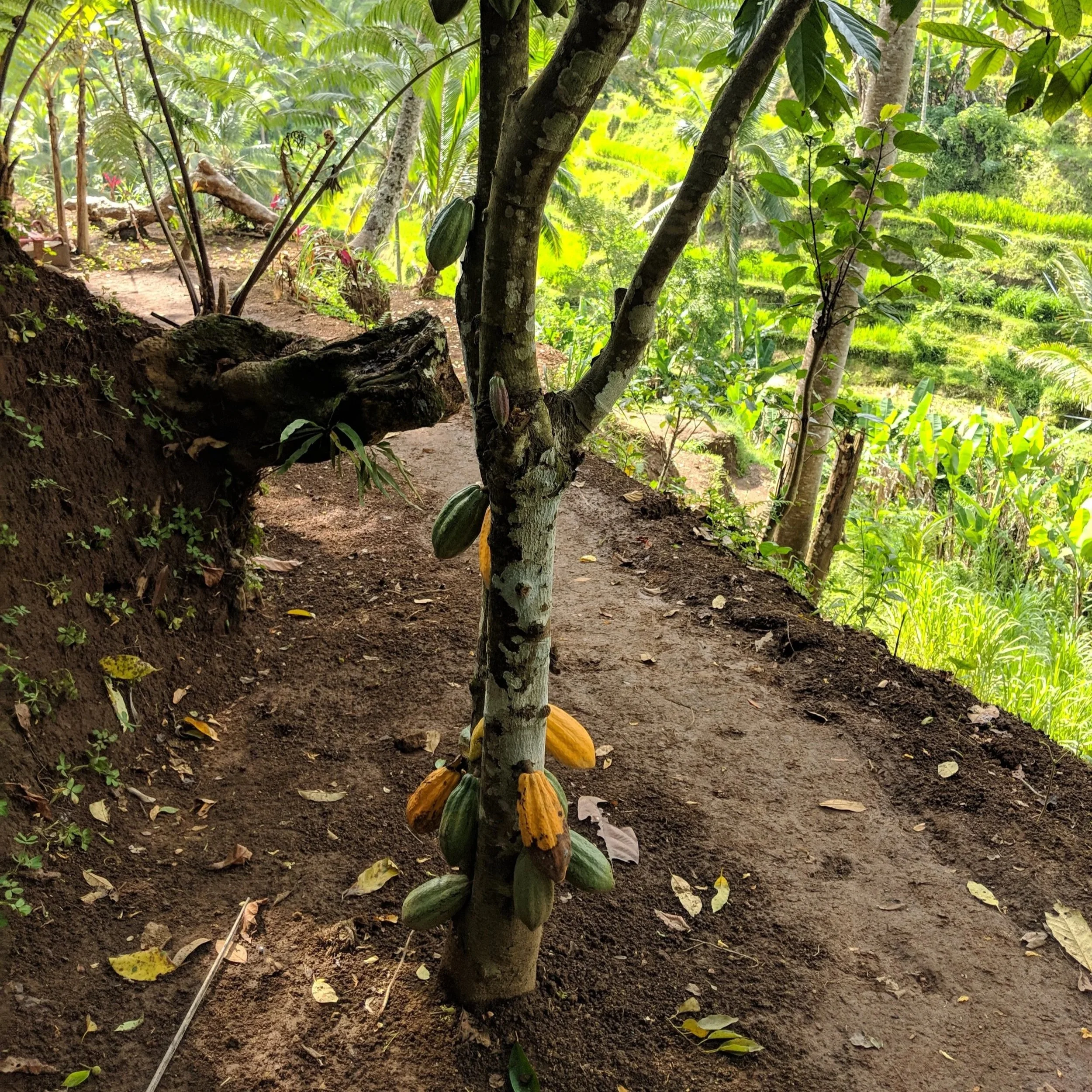
Ka Ka U (Cacao) Ceremonies: Celebrating passion, life, art and nature
Snippets of the past are being rediscovered and brought into modern prominence. Having attended Cacao ceremonies in Bali, Rishikesh and San Francisco I deeply connect with the ideas associated with these ceremonies. These ceremonies are not new to the yoga community, but with a growing desire to reconnect with nature in an increasingly synthetic world, awareness and appreciation for raw cacao’s medicinal and healing properties are rapidly rising. Only recently have I seen it go mainstream, similar to the global fascination with Japanese Matcha.
Snippets of the past are being rediscovered and brought into modern prominence. Having attended cacao ceremonies in Bali, Rishikesh, and San Francisco, I deeply resonate with their core philosophy. These ceremonies are not new to the yoga community, but with a growing desire to reconnect with nature in an increasingly synthetic world, awareness and appreciation for raw cacao’s medicinal and healing properties are rapidly rising. Only recently have I seen cacao go mainstream, taking on a cultural trajectory similar to Japanese Matcha. Across many nature-worshipping cultures, sacred rituals often center around a drink—much like the mindful intentionality of traditional Japanese matcha ceremonies.
The drink for the ceremony is prepared much like traditional hot chocolate, but using raw cacao as the base. Cacao to some denotes passion, life, art and nature. It is kept below a specific temperature during preparation to ensure temperature-sensitive nutrients and medicinal properties aren't lost. The ceremony itself is simple: light a fire, sit in a circle, meditate, sing, play folk music, share your stories and simply enjoy the vibe and company.
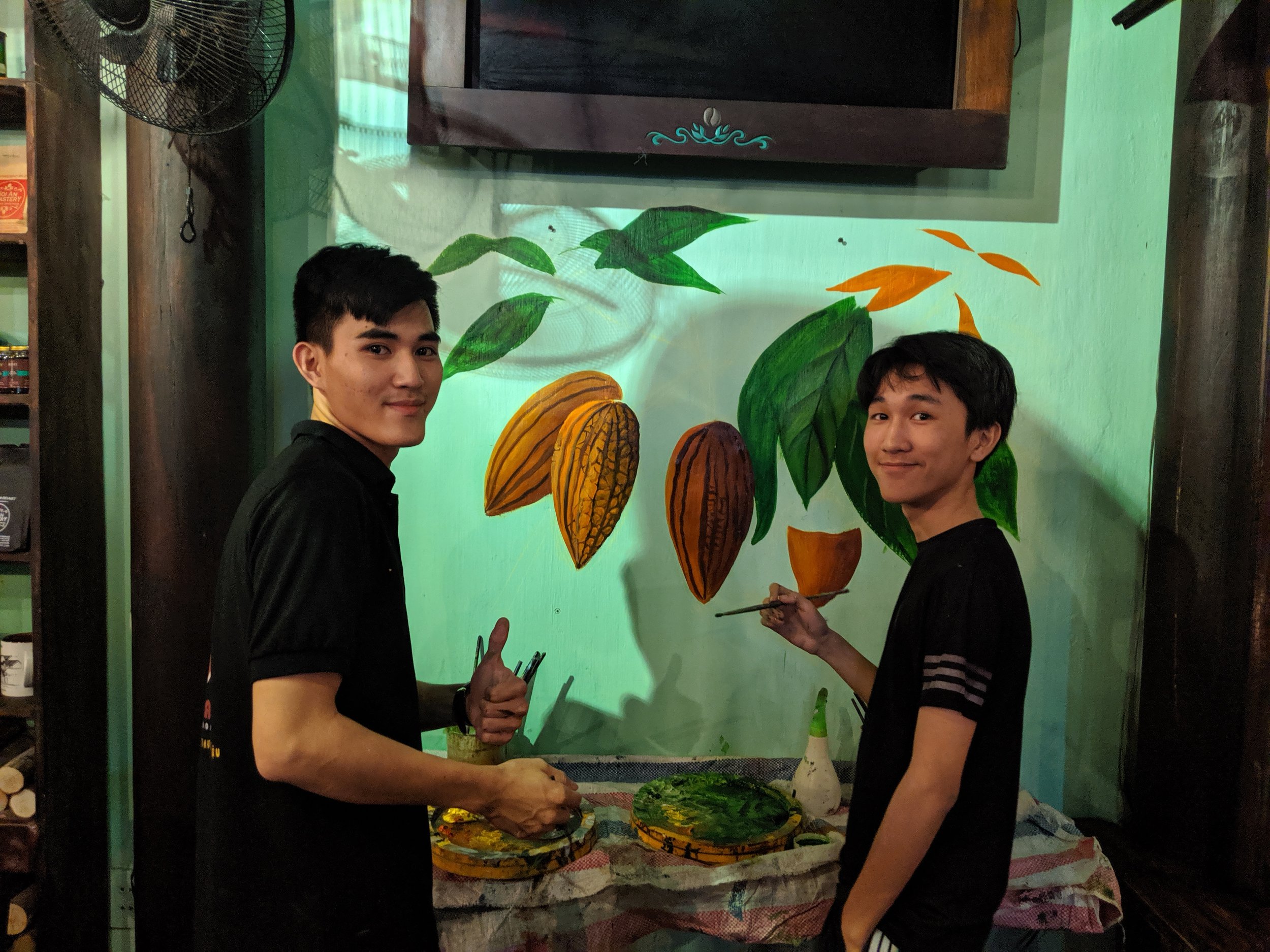
Cacao ceremonies originated in Central America with the Olmec civilization and were later adopted by the Mayans and Aztecs. Practiced roughly 3,000 years ago as community rituals, they were used to honor nature and foster communal healing. Raw cacao comes from the Theobroma tree—Theobroma literally translates from Greek as "Food of the Gods." These trees thrive near the equator (roughly 20 degrees north or south) in tropical rainforests, natively in the Amazon basin and throughout Central America.
To a beginner, distinguishing between cacao, cocoa, chocolate, and coffee can be confusing. While cacao, cocoa, and chocolate are mildly caffeinated and originate from the same Theobroma tree, coffee contains significantly more caffeine and comes from a completely different plant native to Ethiopia. Cacao, cocoa, and chocolate share the same origin—they simply take different paths.
The Theobroma tree has three main genetic varieties: The first one is Criollo which is the most premium variety (known for its lighter beans and delicate flavor). And then the Forastero which is the most prevalent and affordable variety, accounting for roughly 80% of commercial chocolate globally. Trinitario is the third one which is a hybrid between Criollo and Forastero. Recently, scientists have categorized these three main varieties into even more nuanced genetic variations. A fine chocolate connoisseur understands how bean origin impacts quality and price, explaining the vast differences you see in the chocolate industry.
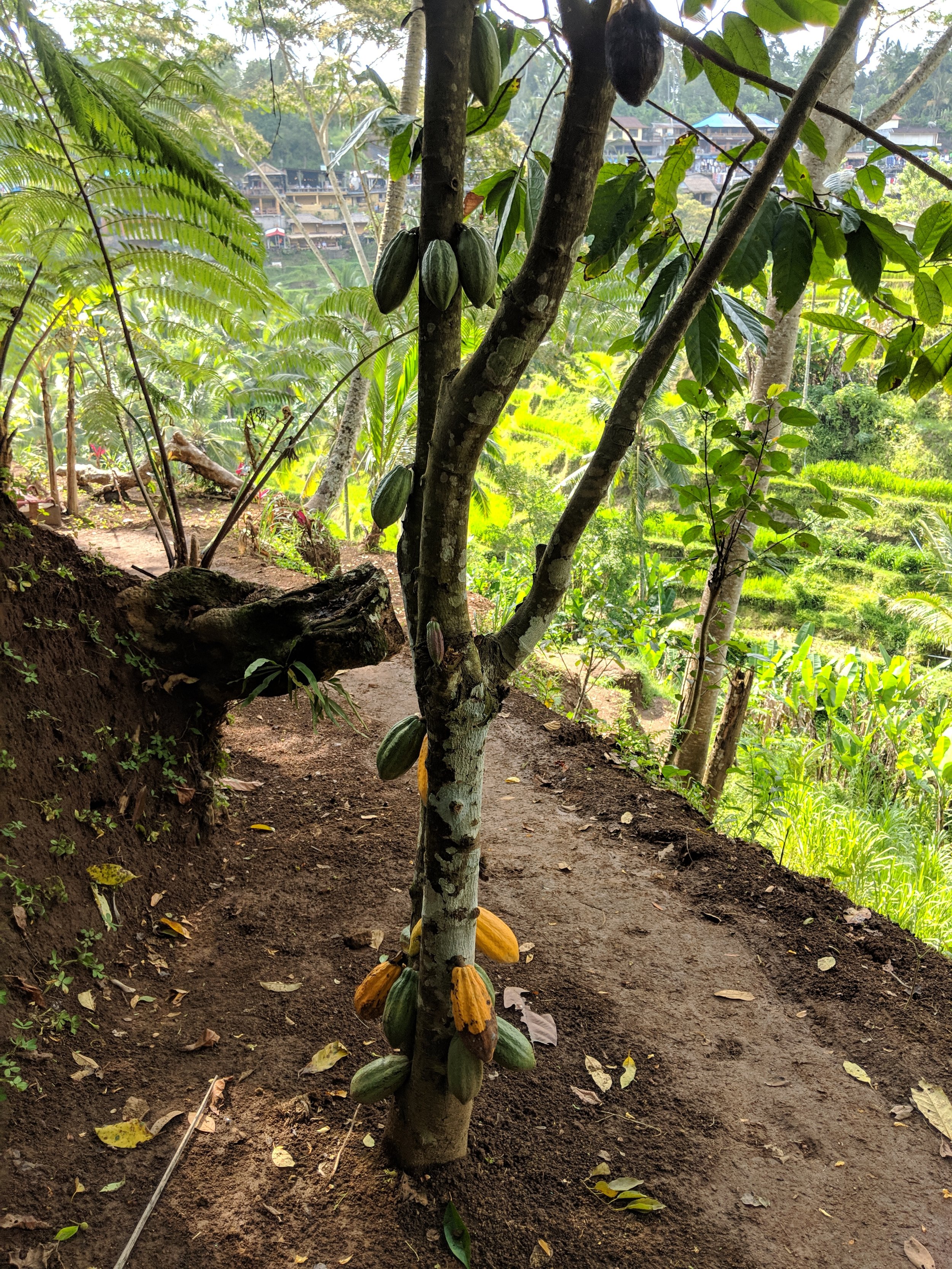
The journey from harvesting the bean to making raw cacao, cocoa powder, or chocolate is fascinating: Pods roughly the size of a football are harvested from the tree and split open to reveal 30–50 cacao beans embedded in a sweet white pulp. The beans and pulp are stored in wooden boxes to ferment naturally. Similar to sourdough bread-making, beneficial wild yeast and bacteria break down complex compounds. This enriches the flavor profile, tempers the natural bitterness, and enhances antioxidant availability. The fermented beans are sun-dried and separated from the dried pulp. These dried beans are lightly roasted at low temperatures (if preparing raw Cacao) or at higher temperatures (if preparing Cocoa powder or Chocolates) to reduce acidity and bring out complex flavors without destroying delicate nutrients. The outer shells are then cracked and removed through a process called winnowing, leaving behind the inner seeds—known as Cacao Nibs. The nibs are ground into a smooth paste called Cacao Liquor (or cacao mass), which consists of non-fat cacao solids and natural cocoa butter.
From here, the paths diverge: For raw Cacao: The cacao liquor is cold-pressed to separate the rich cocoa butter from the solid press cake. The remaining cake is finely ground into raw cacao powder, retaining its original mineral and antioxidant profile. For Cocoa powder: The beans are roasted at higher temperatures and treated with an alkalizing solution (a process called "Dutching"), acidity and bitterness are further neutralized. Cold-pressing this paste removes the fat, leaving standard cocoa powder—commonly used for baking and conventional hot chocolate mix.For preparing Chocolates, it’s a slightly divergent process that involves recombining cacao liquor, cocoa butter, and cocoa solids with varying amounts of sugar and milk. This is also where dark chocolate ratings come into play. An "80% Dark Chocolate" label simply means 80% of the bar consists of cacao components (liquor, butter, and solids) while the remaining 20% is sugar and seasonings. However, because much of that cacao percentage is fat (cocoa butter) and heat-processed solids, even raw dark chocolate isn't quite the same as pure, unprocessed raw cacao powder.
If you haven’t attended a cacao ceremony yet, it is well worth experiencing. The practice is inherently grounding, helping you tune into yourself and your surroundings. It is deeply meditative, opening your heart and bringing you closer to yourself. Some might question why there is so much storytelling or ritual around a simple drink, but I believe it is far more than that. These ceremonies and narratives help revise our sensibilities, highlighting the vital role nature plays in our lives. Nature holds the answers to many of the problems we humans have unknowingly created. If we can take care of how we cultivate the earth and refuse to let short-term commercial interests guide us, we will all be collectively healthier, wiser, and more peaceful.
——————————Pajaor Viejo——————————-
A traditional South/Central American sacred medicine song (often sung during Cacao ) honoring nature, the sun, the moon, and Mother Earth (Tonantzin). The Higher Self / The Soul: In shamanic and ceremonial traditions, a bird represents the spirit or consciousness that soars above the material world. The song calls it "old" (viejo) because your soul or spirit is ancient—it carries the timeless memory of who you truly are before society, conditioning, or everyday distractions. A Messenger of Spirit: Birds are traditionally seen as messengers between Earth and the Divine/Sky in many Indigenous South and Central American traditions. The "ancient bird" is a symbol of a spirit guide whose song awakens human consciousness and brings healing.
Spanish Lyrics:
Pájaro viejo que cantas,
que cantas, esta tierra te ha visto nacer.
Canta, canta, cántame, cántame,
recuérdame que somos todos hijos del sol,
que somos todos hijos de Tonantzin,
que somos todos hijos de la luna.
English Translation:
Ancient bird who sings, who sings, this land has seen you be born.
Sing, sing, sing to me, sing to me,
remind me that we are all children of the sun,
that we are all children of Tonantzin (Mother Earth),
that we are all children of the moon.
——————————
Ref links worth watching if you want to learn more about Cacao farming:
1. Documentary on cacao farming - New York based Cacao labs started by a brother and sister deeply passionate about preserving the rawness of Cacao.
https://www.youtube.com/watch?v=EwM-dzBEVTg&list=PLUJLeMMY-B6NHNVqM5aYcVfCu2_HA9OdS
2. Traditional song “Pajaro Viejo” honoring nature, the sun, the moon and the mother Earth, that is often sung in Cacao Ceremonies: Pájaro viejo
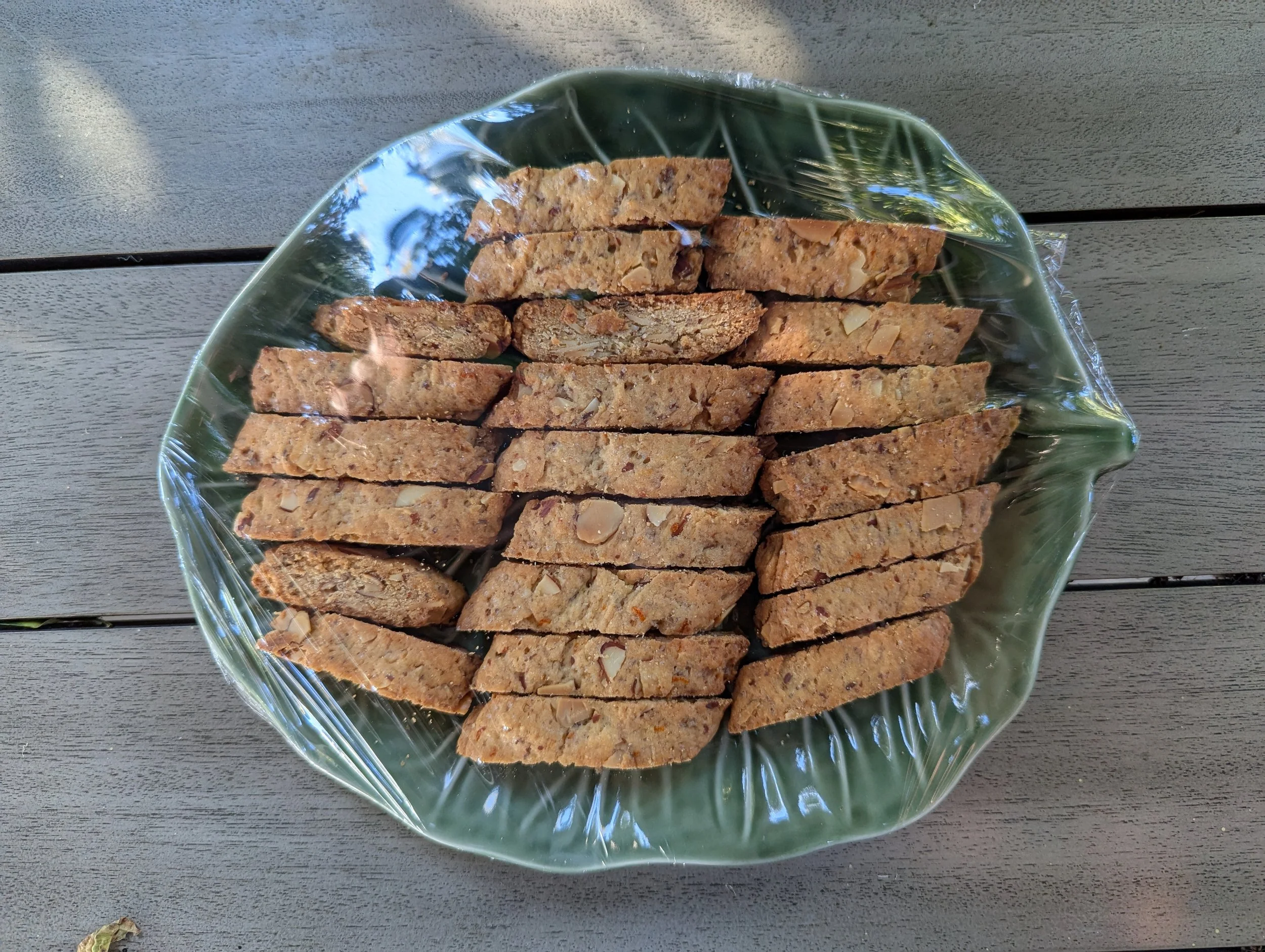
The Charm of Almond Biscottis and the recipe
Organic Healthy Almond Eggless Biscottis
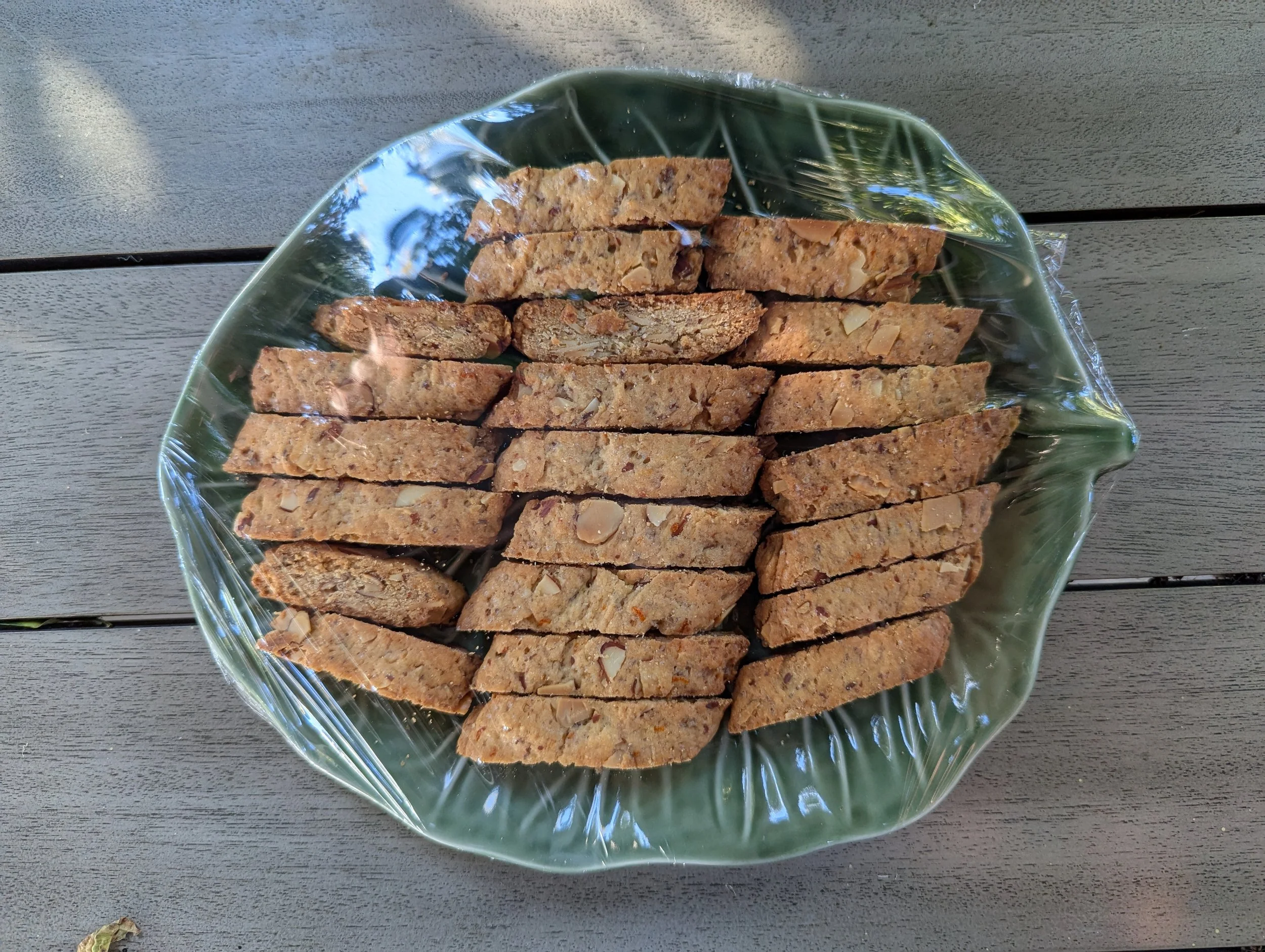
Steps:
Preheat Oven [350 degrees F or 180 degrees C]
Mix Flaxseed meal with water, let it sit for 5 min to gel.
In a separate bowl, cream the butter and sugar until light and fluffy.
Add dry ingredients to the wet mixture. Combine. Add chopped almonds and enough milk until the dough comes together.
Shape the dough into a log (roughly 12 inches long, 3 inches wide) on the prepared sheet. This may need some repetition and work if you are a beginner.
Bake for 30-35 min until golden and firm. Cool on a rack for 20 min.
Cut the log diagonally into ¾ inch slices.
Lay slices cut-side down and bake for another 12/ 15 min per side until crisp. Remember this 12 min per side. You will need to flip it.
Cool and eat.
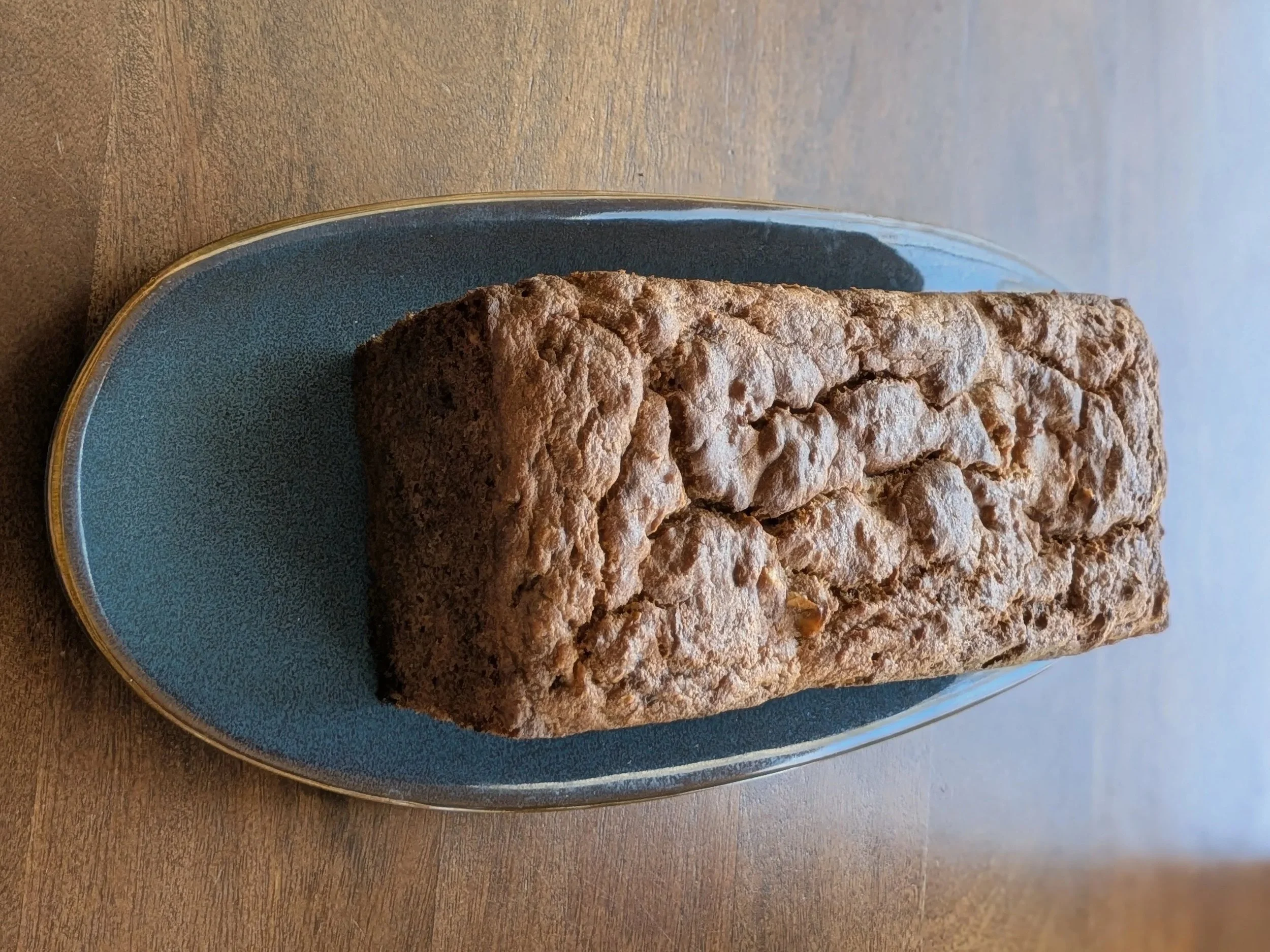
Walnuts Eggless Organic Banana Bread Recipe
Organic Healthy Walnuts Eggless Banana Bread Recipe
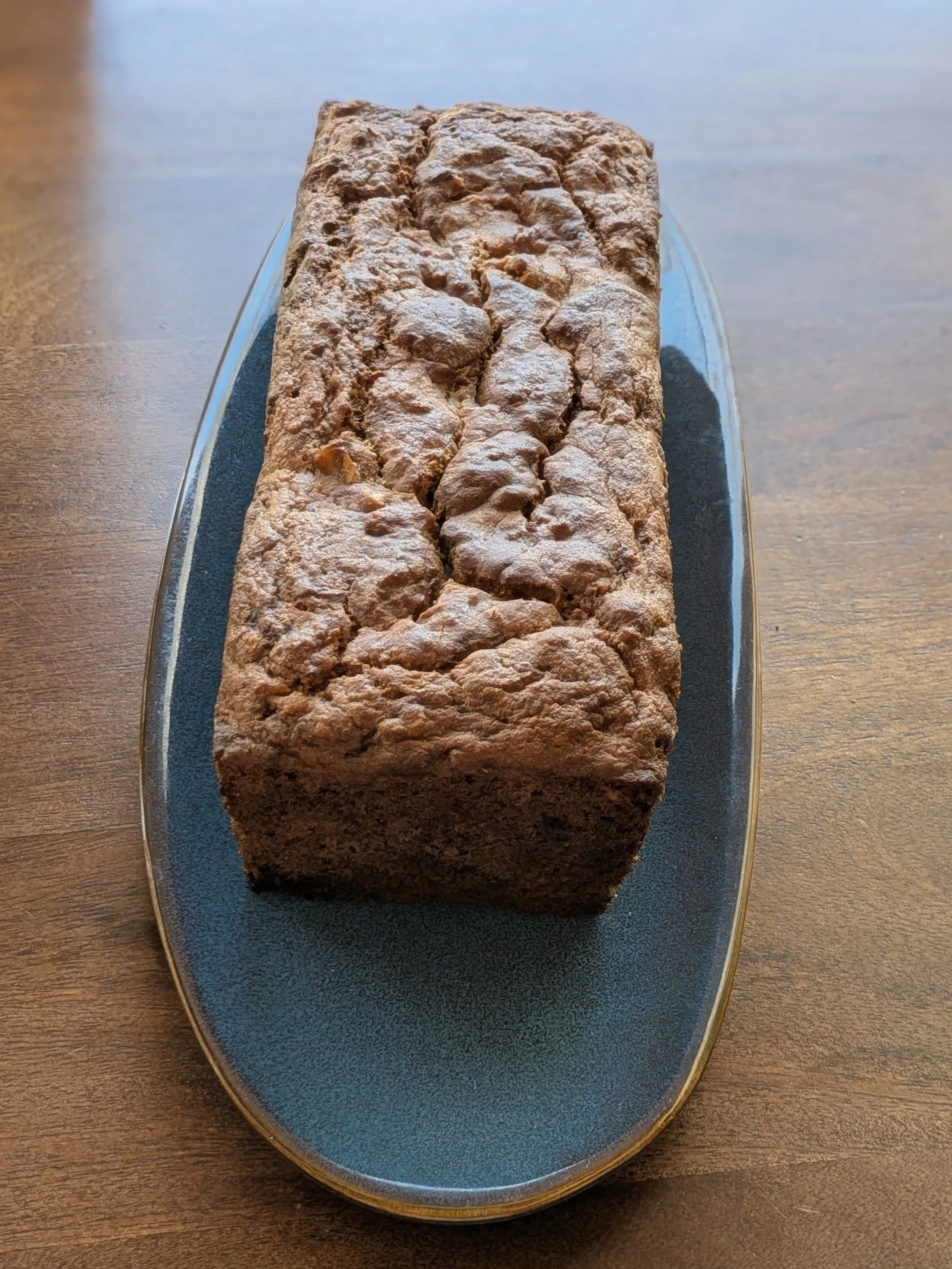
This recipe makes 760 gms of Banana Bread Log. This is not dairy free as I am using Greek Yoghurt. If you find a good substitute for that then this recipe qualifies for eggless vegan banana bread.
Steps:
Preheat the oven to 350 degrees F (175 degrees C).
Lightly grease a 9x5-inch loaf pan with the same neutral oil you are using to make the bread. Feel free to choose a different shape of your liking.
Mix all the dry ingredients and wet ingredients together. Once you are ready to bake, add both dry and wet ingredients together. Mixing them separately is to ensure baking powder and baking soda are added right before you are ready to put the batter in the oven.
Pour batter into the prepared well oiled greased loaf pan.
Bake it for 55 min.
Let it cool for 10 min. The bread should be ready to leave the edge of the pan. Use knife all corners to release it fully and take it out and put it on a wire rack to cool for 45 min.
Your banana bread is ready!
My Early Experiments with Sourdough Bread Making
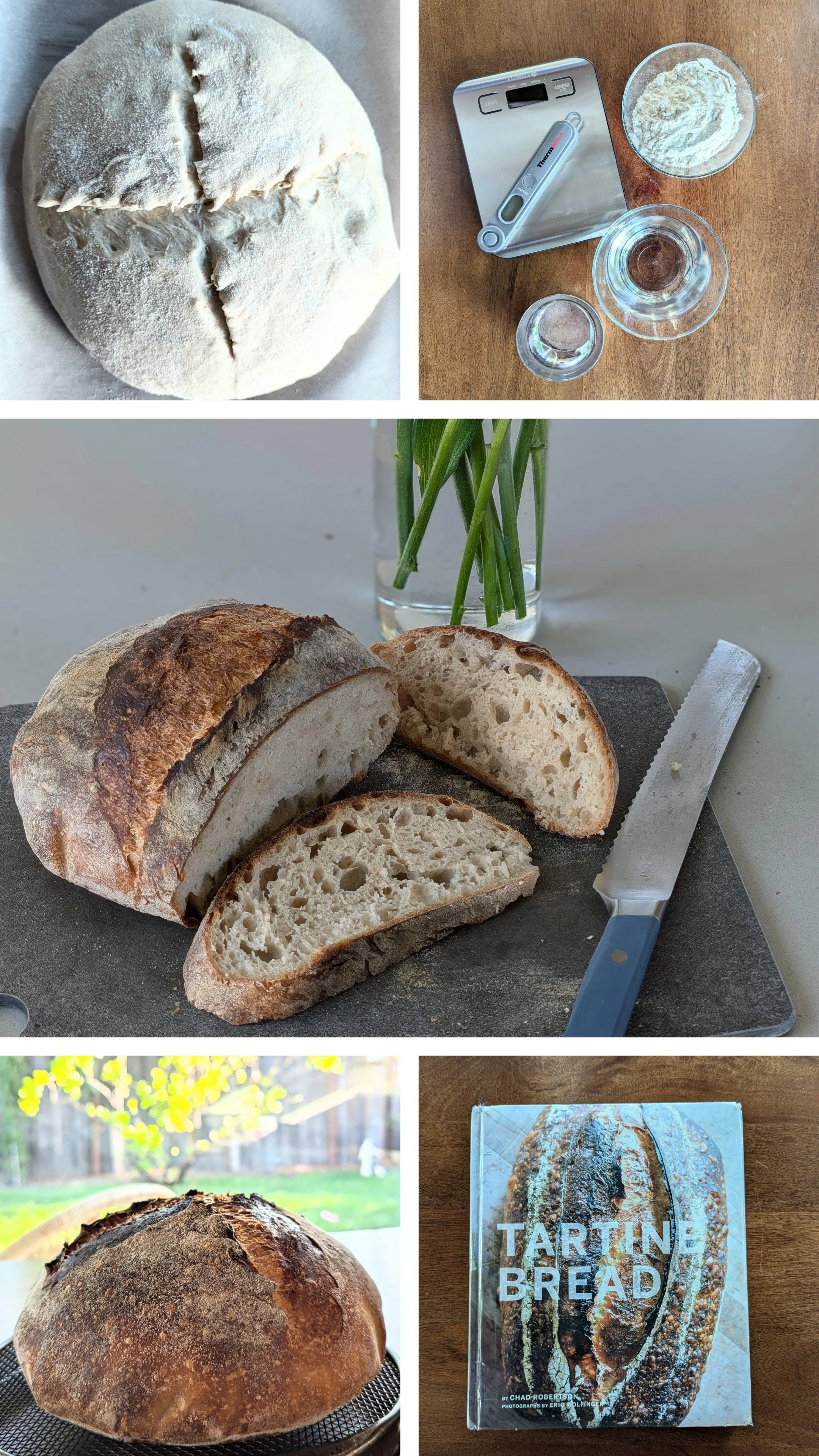
The taste for Artisan sourdough breads is an acquired taste, but once you get it, there is no going back. I have been thinking of baking my own artisan bread for many years now but only recently I finally picked this hobby. The overall baking experience was very therapeutic and challenged me on many fronts. It required me to be less impulsive, be patient with details and measure every ingredient for consistency and predictable outcomes.
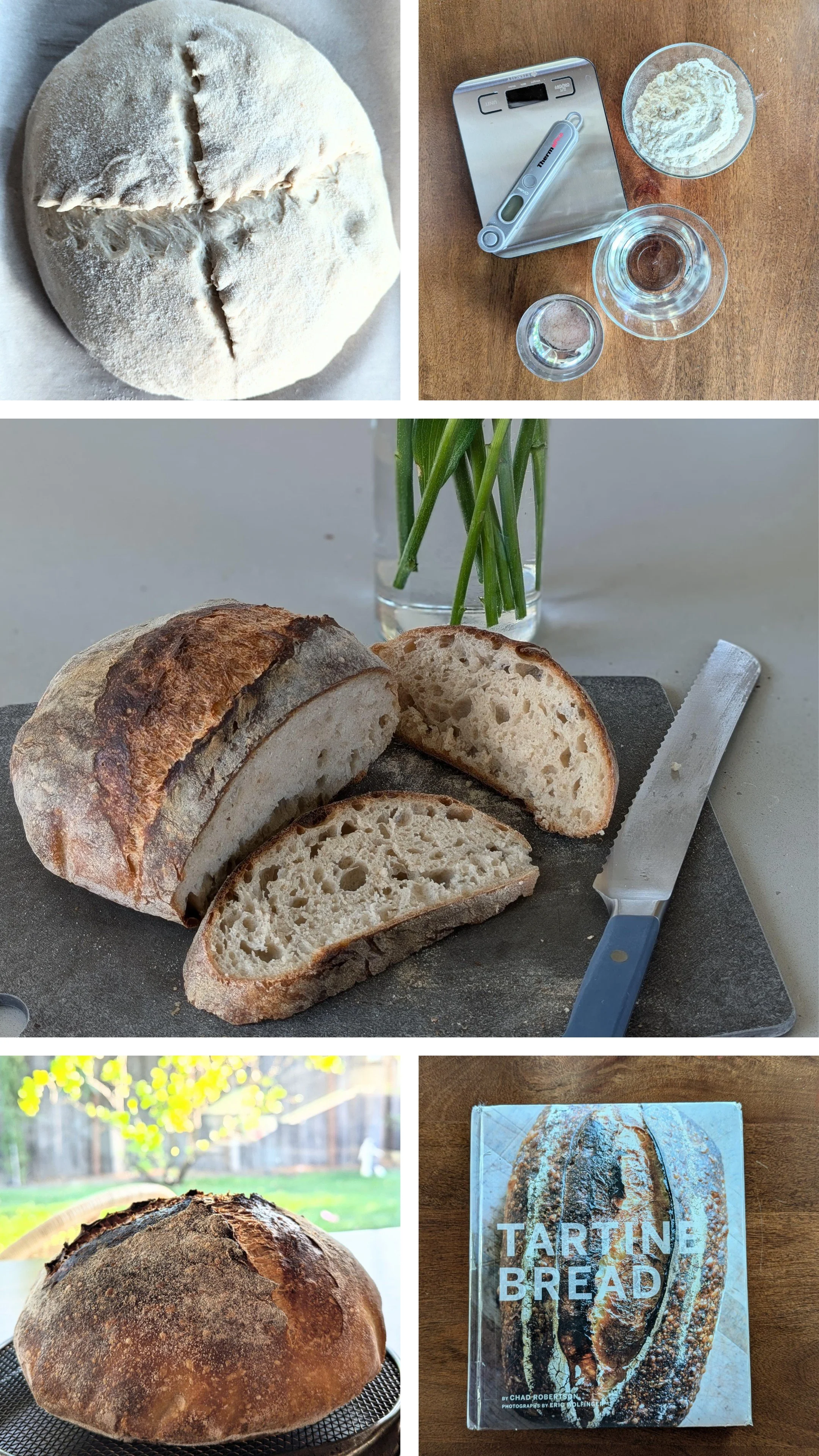
The taste for Artisan sourdough breads is an acquired taste, but once you get it, there is no going back. I have been thinking of baking my own artisan bread for many years now but only recently I finally picked this hobby. The overall baking experience was very therapeutic and challenged me on many fronts. It required me to be less impulsive, be patient with details and measure every ingredient for consistency and predictable outcomes. The whole process felt like a series of controlled chemistry experiments so when I finally after multiple failed attempts, got the results I liked I felt happy. The aroma of freshly baked bread is pretty addictive especially if it's your own creation. It was a small accomplishment but a satisfying one.
I followed the recipe from one of my favorite San Francisco bakeries, Tartine Manufactory which I used to visit often when I lived in San Francisco.. Chad Robertson, its founder, a famous celebrity chef, traveled far to the French Alps and spent many years learning about traditional baking methods before starting his own business. The recipe suited me as it was quite detailed and I'm happy to share my own tips and answer any questions you might have, especially if you're new to bread baking.
Someone said, making bread is easy but creating that perfect bread is very hard. I quite agree with that statement. The more you learn, the more you realize how much you don't know and the desire to hit that perfection keeps you going. It becomes like a chase in eternity. And that is the beauty I guess of any meaningful pursuit in life.