Antim Aranya (The Last Wilderness) -Nirmal Verma.
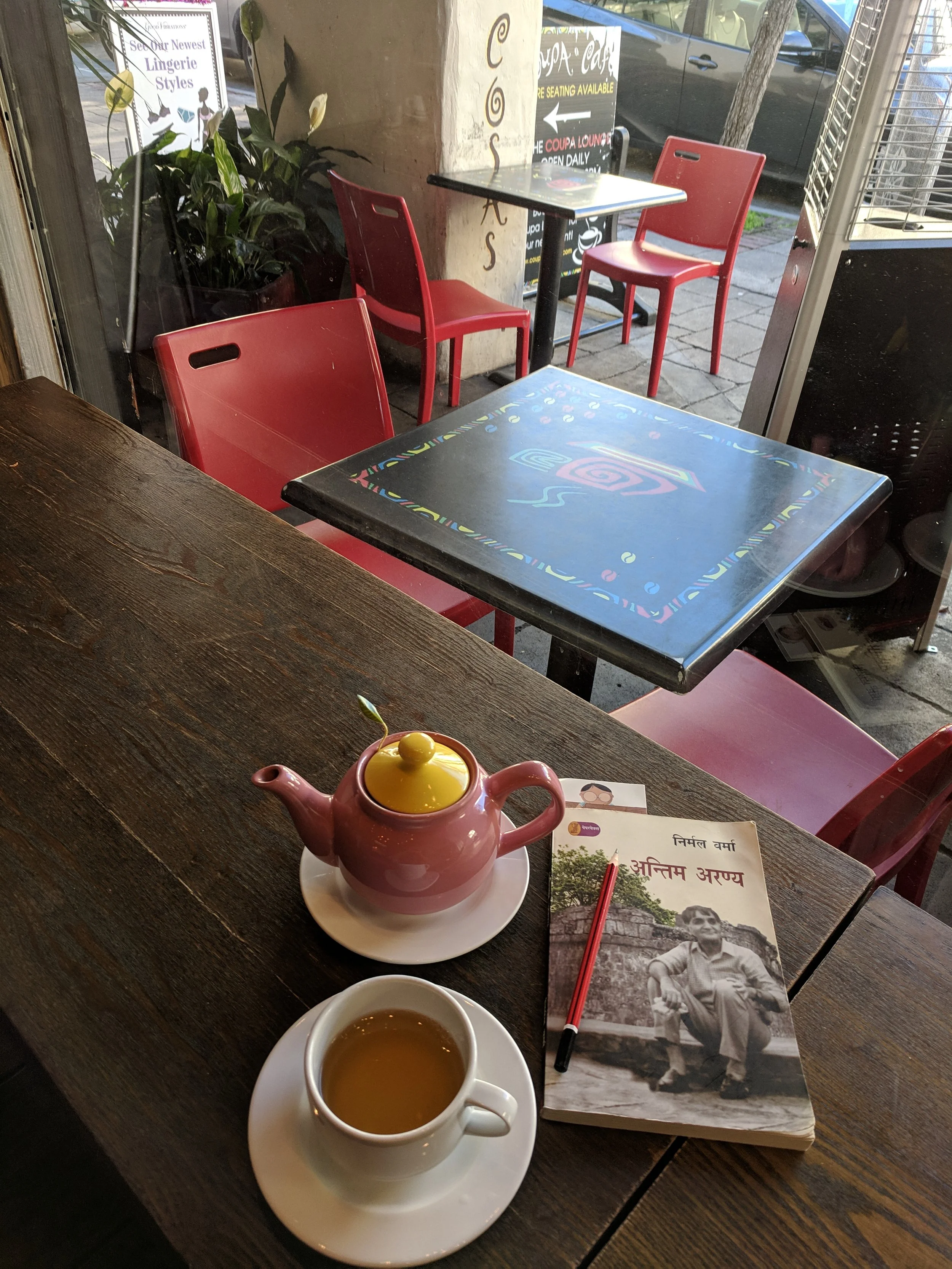
For the first time I read a book in Hindi by an Indian Hindi author. I was sitting at Starbucks in Delhi, when I saw someone reading Shakespeare adjacent to my table. We started talking and later became friends. This person challenged me to read more Hindi literature and suggested Nirmal Verma (and a few other names). Out of curiosity, I picked this book Nirmal Verma wrote before he passed away in 2005, from a local book store in Delhi. Reading literary fiction (vs speaking) in your native language can be a bit challenging in the beginning, but once you get the hang of it, you get into the flow.
I was in complete awe of the beauty and richness in his writing. Later on I found out that this guy was very well travelled, won many local Hindi literature awards and translated a lot of Czechoslovakian literature (Milan Kundera et al) in Hindi and spoke amazing English. A little shame (or ignorant me) that his work may not be as well known and read as some other English contemporary writers in India. His style of writing is deeply reflective, ruminative and philosophical. Makes me realize the potential and power of native language literature. It goes to places where the adopted languages simply can’t. The thoughts, ideas and philosophy sometimes so deeply rooted in the local culture, when expressed well, seem to come out to the front even more. Things are lost in translation.
Languages die. A slow death. Death is probably faster than what it takes them to come into their full existence. The beauty of this world we live in, is the diversity people bring to the table. Diversity breeds creativity and innovation. The mode of expression matters less, the richness in content matters more. In a hyperconnected world that is slowly moving towards uniformity, it’s not clear if native languages will eventually die or get more acknowledgement and adoption from the broader masses. Only time will tell.
