The Sixth String of Vilayat Khan - Namita Devidayal
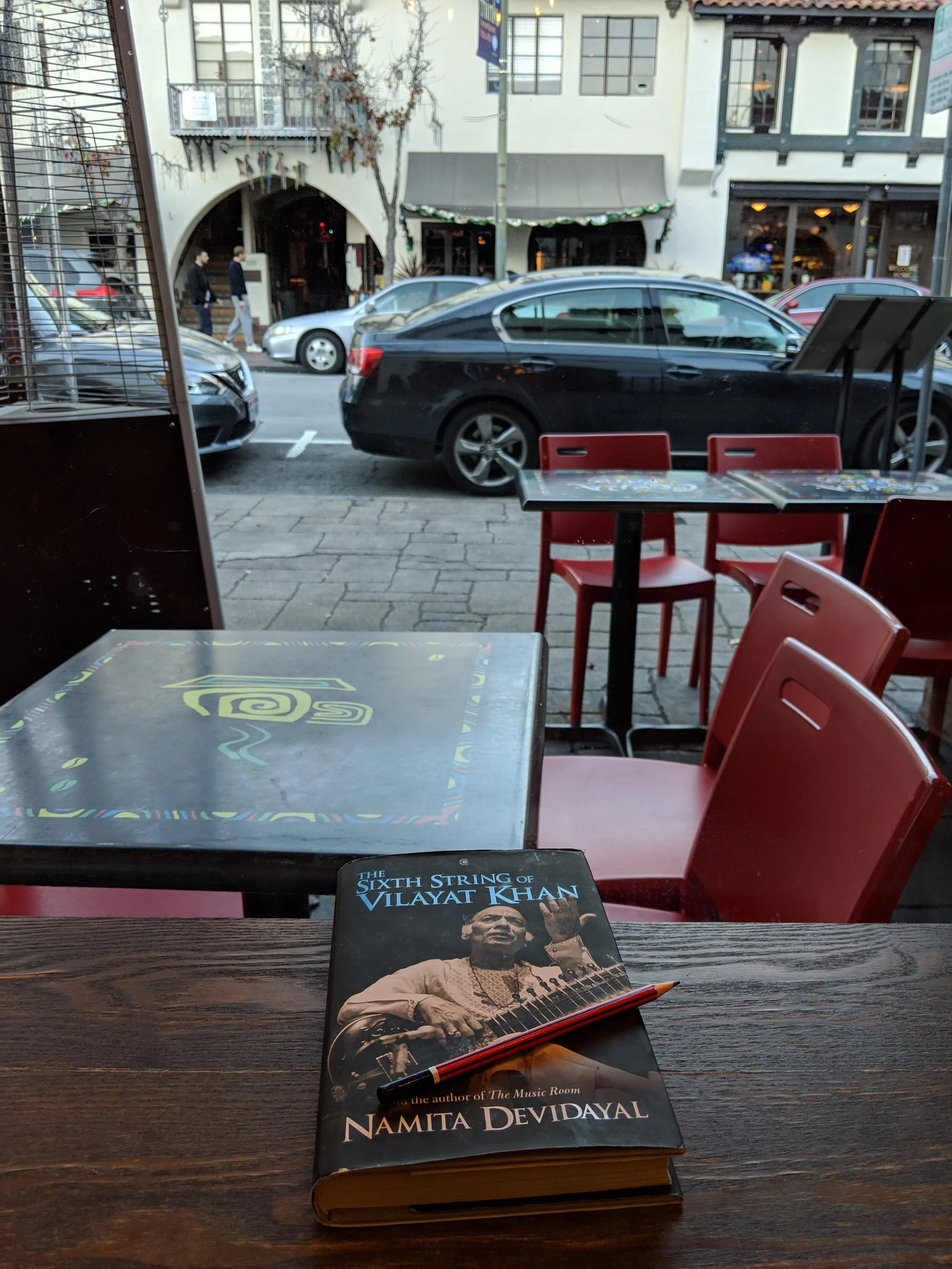
I picked this book from my recent trip to India. Ustad Vilayat Khan a contemporary of Pt. Ravi Shankar (well known in western world) carried forward the legacy of the Sitar instrument in modern India. In that sense his contribution to Indian music is immense and valuable. It was delicious to read more about the journey of North Indian classical music pre/ post independence era. Coincidentally, I had attended a concert of one of the sitar artists - Shahid Parvez at Triveni Kala Sangam center in Delhi. I found out later, after reading this book that he comes from the same family lineage of Vilayat Khan and now carrying forward the legacy of his grandfather’s Etawah Imdadkhani music gharana. It is interesting how you start respecting and connecting with classical music more when you read such books that romanticize and trace the life journey of many of these artists. But ironically the more you know, the more you feel the vastness and infinity of it with a sad realization that you are barely tasting its surface. Many people may not even get a chance to experience and feel this depth in their lifetime.
In India (and probably in western world too), music and spirituality have gone hand in hand over time. It is a core integral part of possibly every human being on this planet in one form or the other. Music has many forms but only one outcome - connection with your deeper core. Different people connect with it in different ways at many different levels. No music is better or worse. In that sense music has just one language or infinite languages embodied in it (depending on how you see it). I feel that music if experienced with other disciplines of life - Science (knowledge), Maths (logic), Art forms (emotions), Ayurveda (food), Yoga (mind/body), Spirituality (soul) and Philosophy (unknown), can be one potent way to attain the “perfect balance” we all keep striving for in our day to day life.
