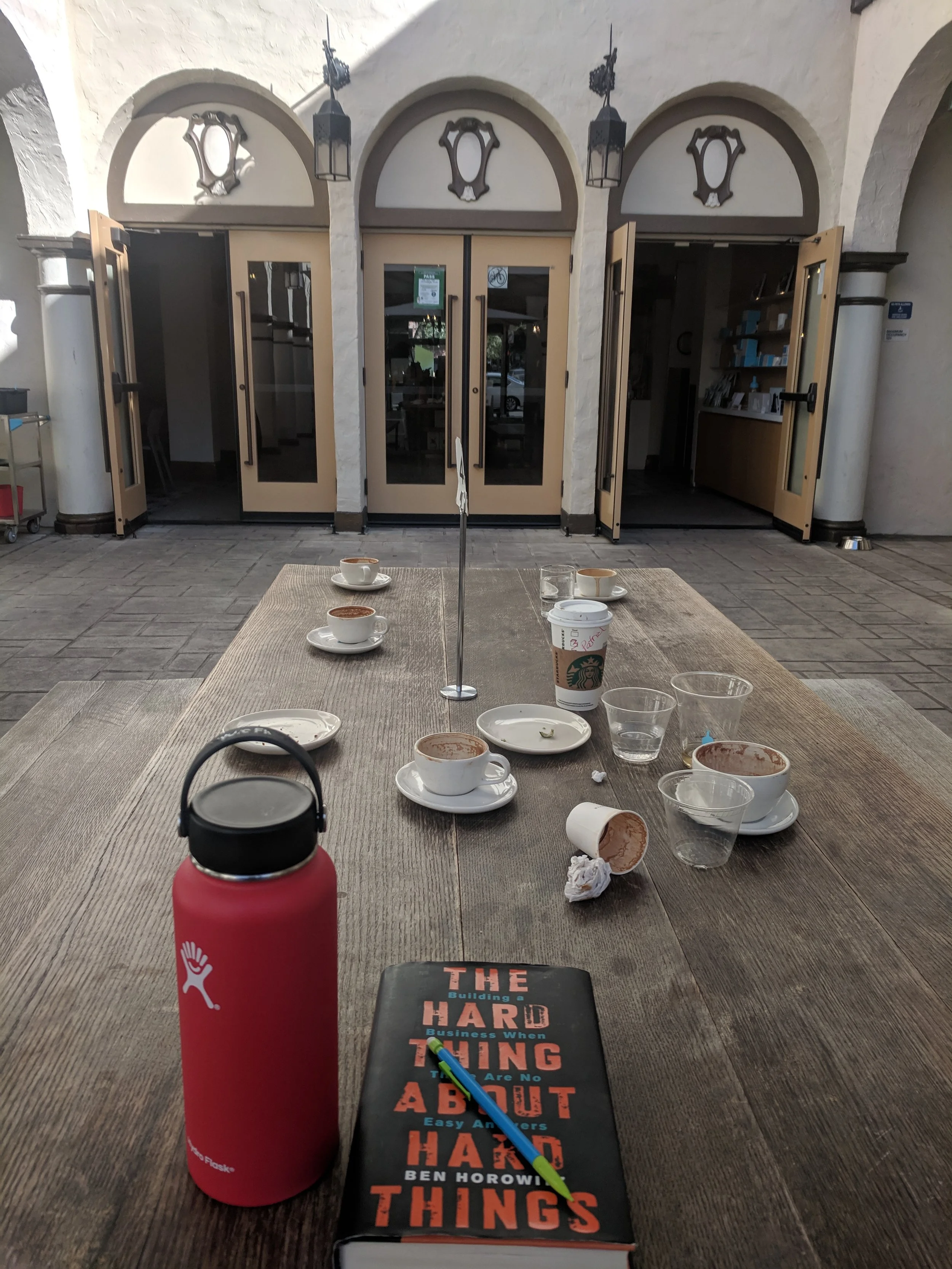
The Hard Things About Hard Things- Ben Horowitz
Honest experiential journey of an entrepreneur who is well respected in the valley and runs a famous VC firm. Thankful to our new VP who distributed this book in our team as a part of a new brown bag series initiated by her. The book covers comprehensive aspects of entrepreneurship. I won’t recreate what’s written in the book as for that you can always read the book. Recreating some of the thoughts that went through my mind while reading the book.
Authenticity Matters: There are no set rules in the game of building a new business or building your career in the corporate world. Be honest to yourself. Have the courage to ask the right questions both to yourself and to people in your ecosystem. Silicon Valley culture is very polite and diplomatic on the surface. It doesn’t promote confrontation and being open about your real thoughts. Many books will give you conflicting advice on the approach to express your thoughts which leads to confusion. Feel good VCs will talk about always being nice and polite. Hard core war philosophies will talk about being shrewd and ruthless. I guess the approach doesn’t matter. Deep in the mind people are fully conscious of the value you bring to the table. Be authentic. Authenticity and the value you bring to the table matters more and eventually gets picked.
Significance of “Why” vs “How”: Many times, a lot of our energy is spent in figuring out the process of finding the right answers. Sometimes, not focusing on the “How” but “Why” may be sufficient. The energy you generate in the ecosystem by asking the right questions will automatically push people to find the right answers in the due course of time. Also, there are no predetermined answers to business problems as times we live in are highly dynamic. Forcibly fitting previously designed models and HR theories to current situations may not work. Each situation is so unique, especially when analyzed in the dimensions of space and time. The key is to empower yourself in building an “instinct” or “gut” that is powerful enough to guide you through that situation.
Good times vs Bad Times: Life is generally a zero sum game. But this principle may not fully apply in the corporate world. There are many examples of people in silicon valley who got exponentially lucky. Some random event in their life, they got aligned to the right business growth at the right time and grew with it. The only contribution they had towards this growth was not screwing up things for the business. It seems like a pretty low bar. You will rarely hear about turn around stories. Silicon valley doesn’t want to hear them as it’s not sexy and glamorous. People want easy wins as that’s romantic and dreamy. 99.99% of the stories in the world are baked in hard core reality. But unfortunately this other 0.01% end up creating the narrative for the rest of the population. Not a great idea to imitate others. You are a unique “You” with a very unique past and a unique future. What worked for others may not work for you. You can take ideas from others but eventually you need to put in your own hard work and create your own life framework to guide you. Test during the bad times builds your character and helps you strengthen your foundation. That strength will also help in building your confidence that will go far in leading a successful life, if not a lucky life.
You are a CEO in your own role: One doesn’t need to start a company to be a CEO and have the autonomy they desire. Eventually what matters is if you are able to express your value system and life philosophy through your work. For that you just need to find situations that may give you those opportunities. It doesn't matter where you find them. Some are found in small companies. Some are found in big companies. Entrepreneurship is a lot about building things vs starting companies. While I do agree that big companies end up becoming bureaucratic and slow down processes but finding smaller teams can help you own a particular domain and give you your autonomy. The satisfaction you get in building things can be addictive as that can propel you to take bigger risks and even build bigger things. Exposing yourself in those situations can be fun.
