10 Days in Japan
The country: Flow of Zen and rationale
Most travel narratives are a play of our own imaginations. Some need a special mention. The narrative on Japan is one of them for me and it is better to write about it when memories and emotions are fresh from my recent travels.
Japan is the most visited country in the world and when you visit it you understand the reason behind it. The ease of navigating it in spite of the language barriers astonishes you. Japan was the first country to introduce bullet trains and to think that it existed in the 1960s when other countries are only getting started speaks of the technological advancements Japan made in the last century. I wondered why Japan brings so much fascination amongst the western community versus a country like India that may have even more layers in its culture and history. I think it boils down to the infrastructure that the country has built and the social principles it has adopted over centuries which allows a tourist to feel safe, peaceful and welcomed. It doesn’t matter which ethnicity you are from. Everyone is treated with the equal sense of love and hospitality. And that secure feeling is what drives so many people to this beautiful country again and again.
It is a country of paradox. The profound minimalism in their culture and philosophy conflicts with its top economy status. To me it is a place that brings together eastern flow and western structure in a very beautiful way. This is something unique and precious and something that would not exist in any other part of the world. All around, it was inspiring to see the island country of 125 million population so spotless, noiseless, organized and clean. The whole population is trained with a similar sense of discipline and shared ideas around social life. People do their jobs with a sense of devotion. You hardly see frustration on their faces. So much patience when you deal with them . I am sure there is a lot that goes inside them but they just don’t show it. Either they are wired like this or trained over multiple generations to put a facade in public life.
Japan is also a study in design and art. You crave to flow and learn more about its design principles. The pottery is unique and highly evolved. Cafe culture is strong everywhere and to me it is a hallmark of a place that breeds romance and creativity. Small details have their own beauty and reflect a high sense of aesthetics. What fuels these high standards of aesthetics has been a big mystery to me. Things just flow. Not loudly but in a subtle fashion.
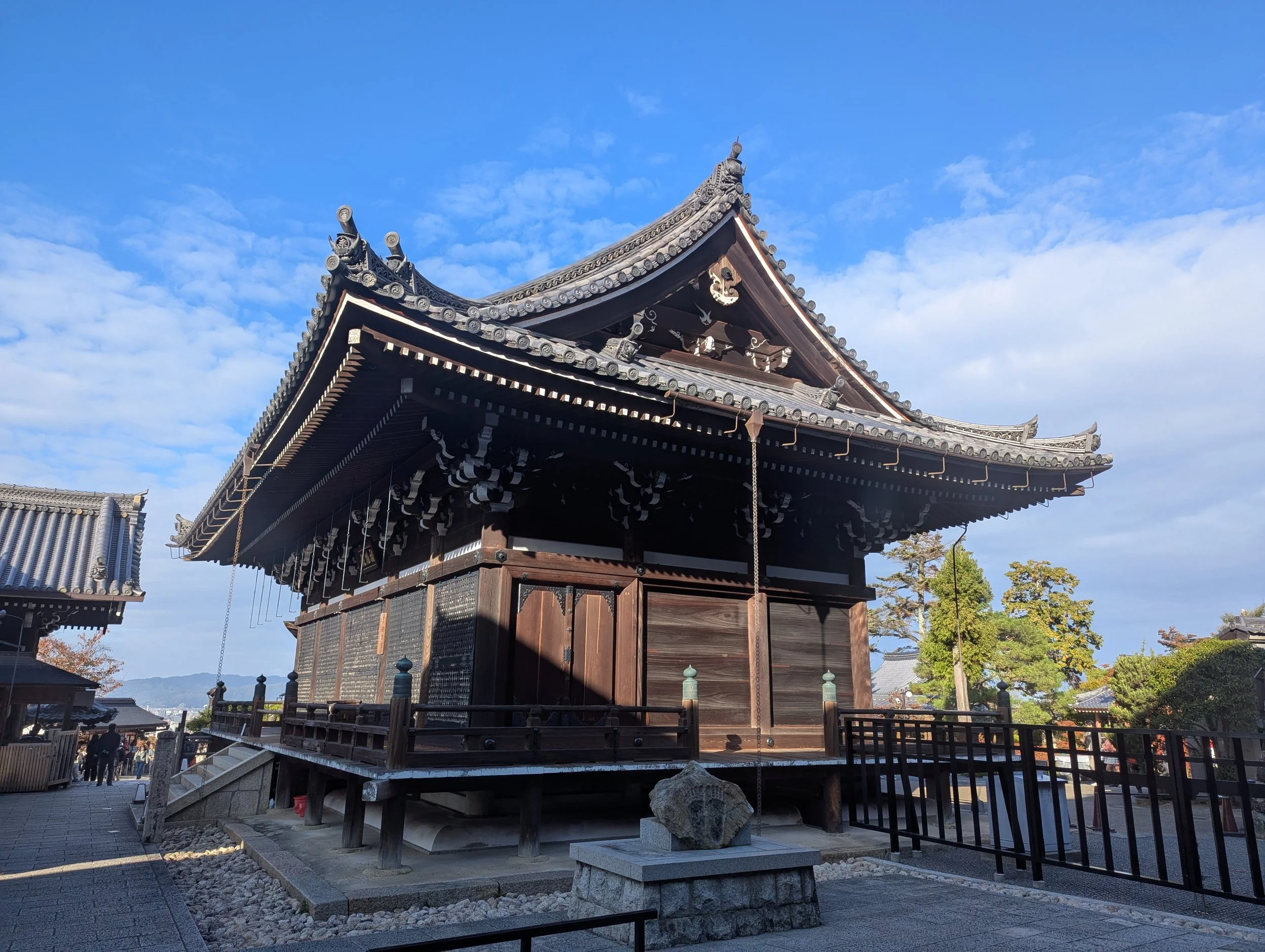
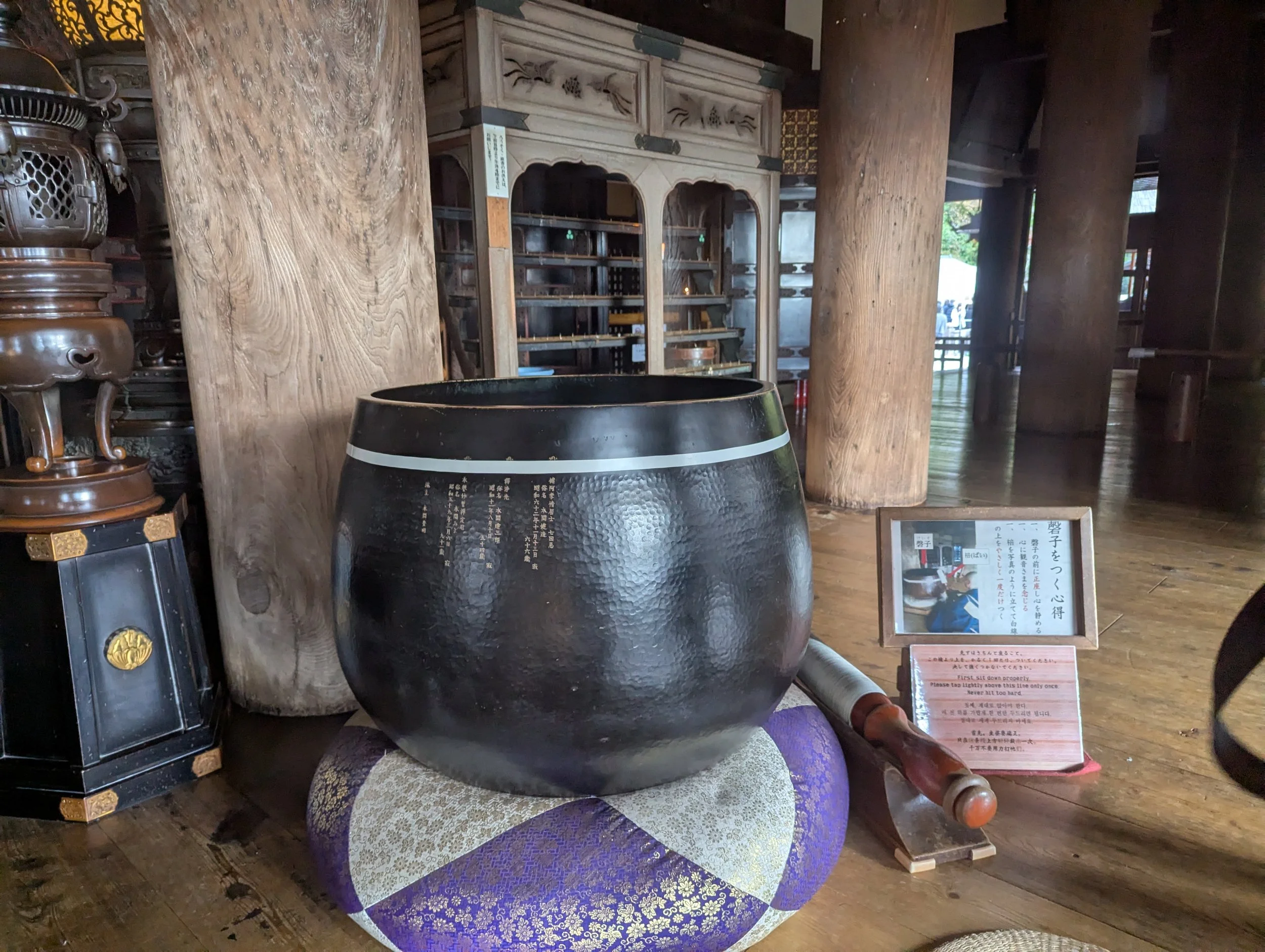
Japan has two predominantly two religions - Buddhism and Shintoism. Temples are not grand when compared to Asian countries but seemed like institutions where you could study and go deeper in Zen and other practices. Every temple has its own finely curated zen garden. It was a pleasant change to be served per your needs and not American size in the restaurants or grocery stores. You look for garbage bins on streets and you find none. The houses were traditional yet modern and comfortable. The tap on top of the toilet to wash your hands so that the water can be repurposed for flushing catches attention. It was also endearing to see that even with all the technical advancements, most people still preferred to let their clothes dry in the sun versus using the automated drying option in the washing machines. Probably stems from their desire to stay close to nature and the title of the land of rising sun seemed apt in this case.
Given the short time and there is only as much you can experience in ten days, we ended up sticking to the known places. The beauty of Japan likely resides in exploring quieter places where tourism hasn't yet touched.
Our Itinerary
(Day 1- 3) Tokyo: Order in Scale
Tokyo was a surprise winner. The charm of the city pulls you in. A big megapolis with its 50 million population packed in a small sea facing land. When you look from outside, the entire city is moving at its own pace - some places are super crowded and others isolated. There is civility all around. The city is spotless and noiseless. An unspoken order. The sense of minimalistic design, elegance shines through in their parks, road signs, and cab drivers. I have never met such ever smiling, helpful and patient taxi drivers in any other big city in the world. You keep wondering where the chaos and the noise and the clutter are, synonymous with a big city. Where does all that frustration of a big city that accumulates go away? What are the ways in which Japanese people express and take it out? How well are they trained to soak it in and not express it? And how do you do it at scale? Something not obvious from outside.
(Day 4-6) Kyoto: The city of reality revisions
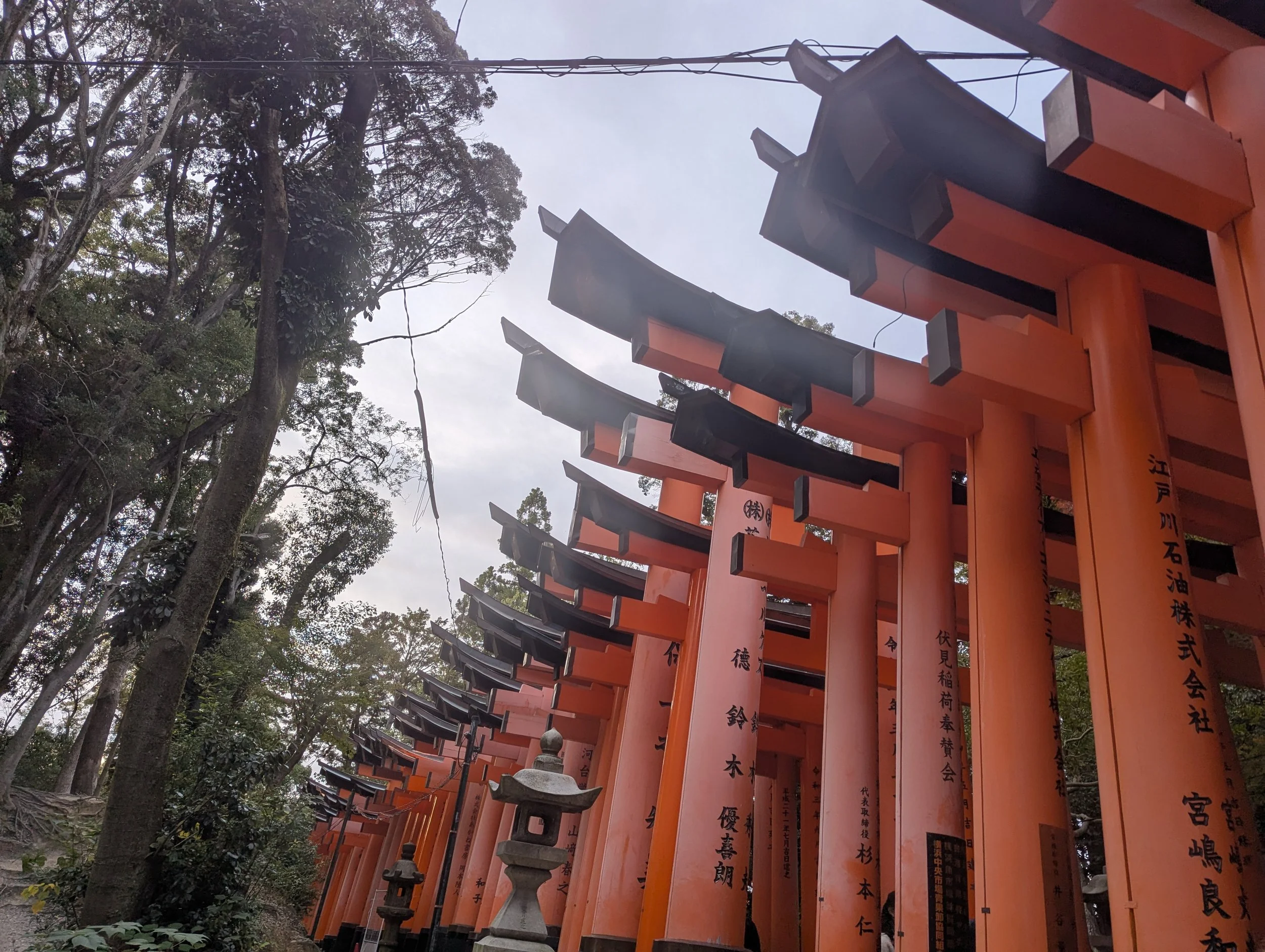
For many years, I carried an abstract exotic imagination of Kyoto and the reality proved to be very different. The unrealistic imaginations likely stemmed from an idea that I carried over many years. I imagined Kyoto to be a place on earth that would be the perfect mix of east and west. A place that would be sparsely populated, isolated in geographies, propagate Zenism anywhere you go and would have the highest standards of aesthetics and beauty all around. The external narrative that I had read in books didn’t help it either and added fuel to this imagination. When I visited, I finally got to put some flesh and color to the imagination I had built around this city. Sadly I was disappointed. There was nothing wrong per se with the city but I was saddened to see that it was like any other big cosmopolitan city. The train station was super crowded. The well known temples and all the places I had marked to visit had an ocean of people moving around killing the solace and the zen I was looking for. Downtown was flooded with modern shopping stores. It appeared that the narrative on Instagram and social media directed the world’s footfall to this city and its favored places. Over the years this footfall killed all its buzz. But then how could I complain when I was myself the problem. The ultimate irony and the dilemma that a traveler faces when exploring new places.
Once this reality fully touched me, the vivid imagination of Kyoto I carried in my mind evaporated never to come back. I wanted to go back to that dreamy beautiful image of Kyoto I carried all this while, but sadly it was gone forever. The only silver lining was that it gave way to a new foundation, a revised anchor point which became the basis for my new imaginations and ideas about this city. It also made me aware that many times, I may be a prisoner of my own imaginations and reality may have nothing to do with it. That’s what happened to me in Kyoto. .
(Day 7) Uji: The city of Macha elegance
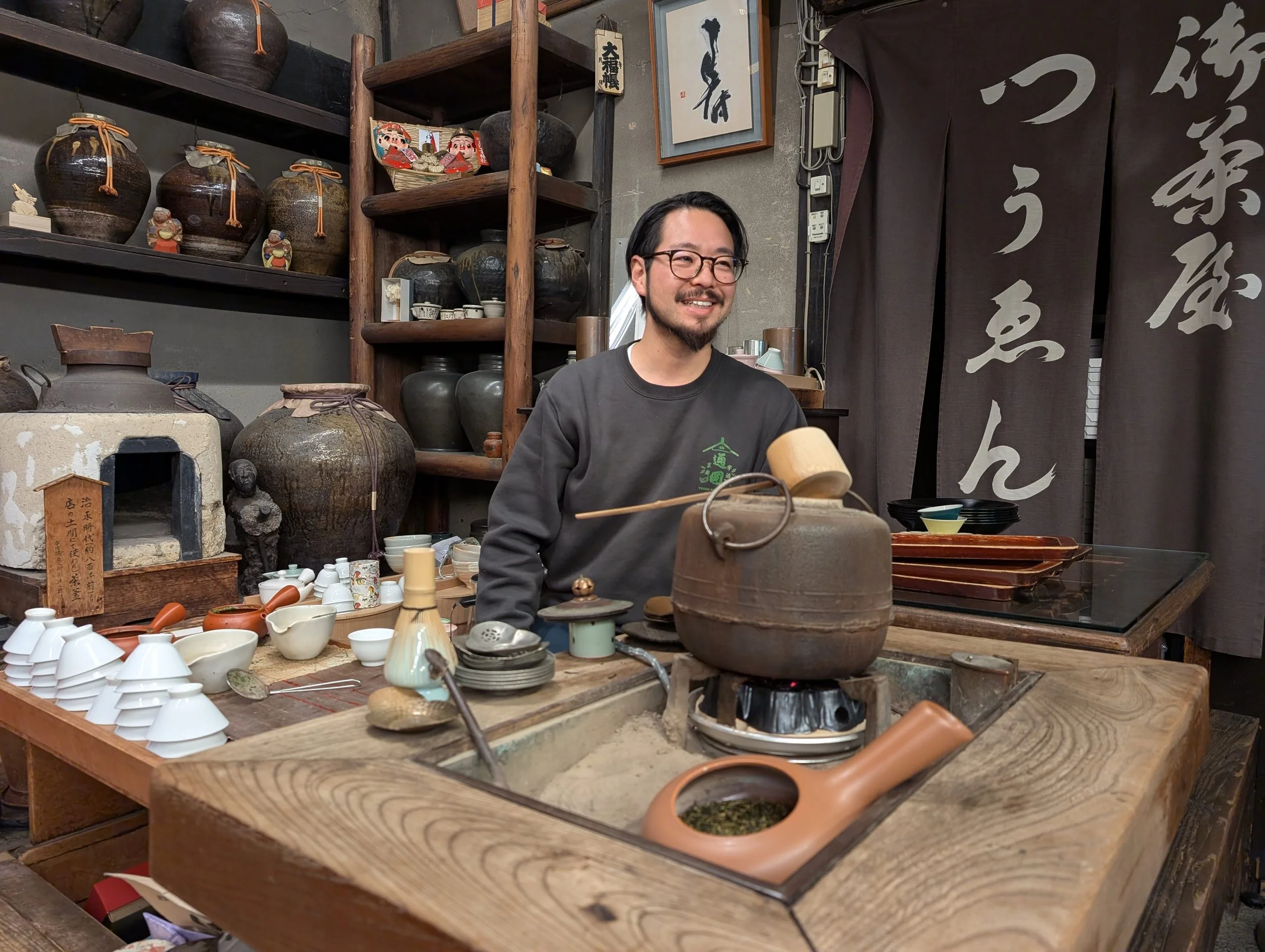
Only in Japan the idea of a healthy tea can incite so much romance and mysticism. Tea making is a science and an art in itself. While the whole world is obsessed over coffee, it's refreshing to be in a land where you can sip tea that has tremendous health benefits. Town of Uji, the birthplace of Macha tea, was a surprise visit. A small, slow, elegant and beautiful small town just 30 min train ride away from Kyoto. Design elements and aesthetics stood out distinctly in this town from the rest of Japan. It reaffirmed my belief that there is more to Japan than just the tourist places we were visiting. Our highlight from Uji was to visit Tsuen Tea, the oldest tea shop in Japan (and arguably in the world) founded in 1160 during the Heian period and now being continuously run by its 21st generation. They didn’t expand and just stayed at the same place alongside the beautiful river of Uji.
(Day 7) Nara: Conversations with the messengers of gods
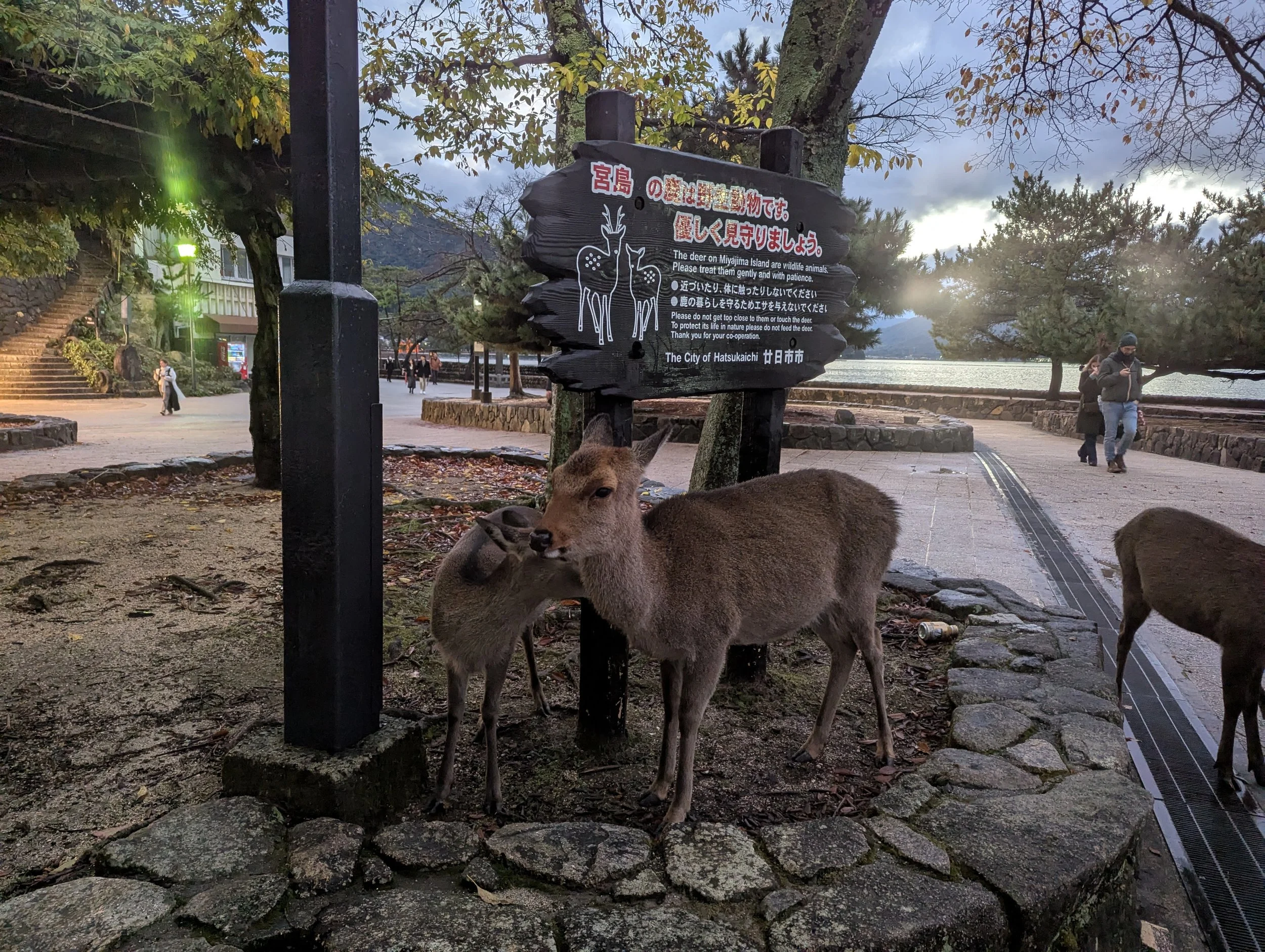
Nara was slightly underwhelming given the hype around its Deer park. Deers are considered messengers of god in Japan and respected. They are given the same treatment as Cows are given in India. Walking around on the streets where hundreds (or maybe thousands) of deer descend from the top of mountains and head back with sunset is a unique experience but feels more unique in imagination vs reality. There was a distinct hippie vibe evident from its vegan culture that we have missed exploring on this trip.
(Day 8-9) Hiroshima: A space to introspect for the power seekers
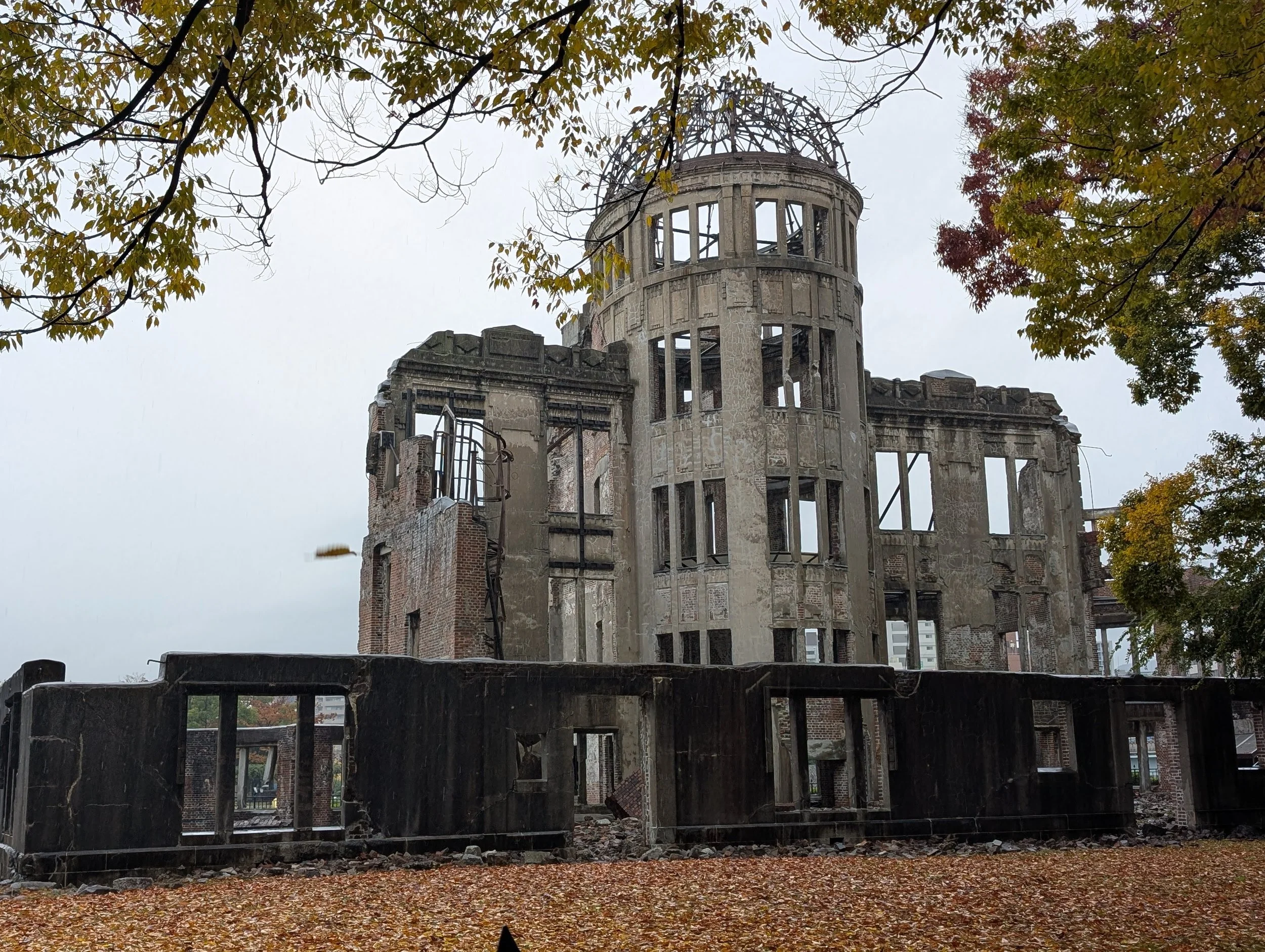
Hiroshima, a city that connects your childhood with the present in its own unique ways. As soon as you arrive in the city and get out of the train station - something flutters in your heart. There is a distinct moment where you close your eyes and wonder at the randomness of life. All the stories that your parents told in your childhood about the atomic bombing come alive to you. You wonder at the mysteries of life and the randomness of where all it takes you. A boy born in a very small unknown town of India standing here and visiting another remote city of Japan that has no other historical significance but the only fact that it was ruined by an atomic bomb. Who would have thought and planned that you would be standing at the epicenter of the atomic bombing site and soaking it all in. The futility of war and inflicting pain and misery on innocent people and being puppets in the hands of power seekers. Life can get unfair for no fault of yours and there is only one emotion you feel - of gratitude that you are alive with an awakened consciousness of differentiating good over bad.
Besides these introspective thoughts, the city of Hiroshima provides you just the right pace that one often needs in their busy travels. A slow, quiet and introspective energy and away from the hustle bustle of a big city but still modern enough to keep you plugged in with the current world. One of my favorites from the Japan trip. 